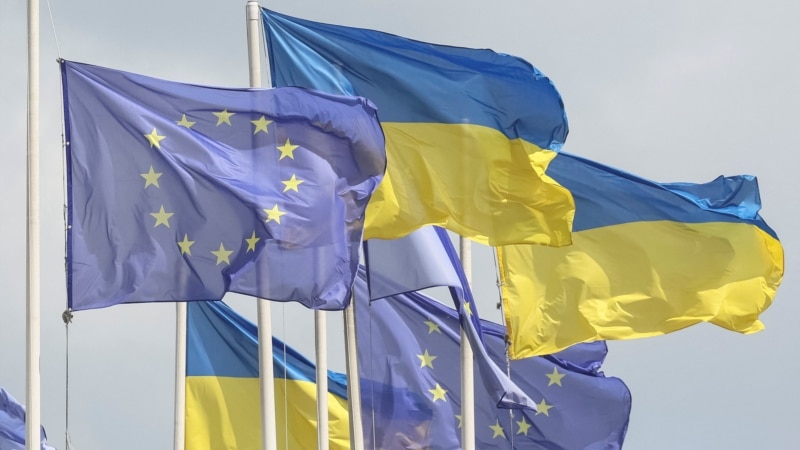
Germany’s Foreign Minister, Johann Wadephul, has announced plans for discussions with Hungarian officials regarding Hungary’s intention to veto the 20th sanctions package against Russia. The Hungarian government, led by Prime Minister Viktor Orbán, has stated it will block the sanctions until Ukraine resumes oil transit through the damaged Druzhba pipeline to Hungary and Slovakia.
Wadephul expressed surprise at Hungary’s position, stating, “I am surprised by Hungary’s stance. We will discuss this with our Hungarian colleagues. I do not believe it is right for Hungary to betray its own struggle for freedom and European sovereignty. We will once again present our arguments in Budapest and here in Brussels to encourage a reconsideration of their position.”
Poland’s Foreign Minister, Radoslaw Sikorski, remarked that he was not surprised by Hungary’s decision. He referenced stalled negotiations regarding Ukraine’s EU membership and the distribution of funds from the European Peace Facility to countries that have provided military assistance to Ukraine. Sikorski linked Hungary’s stance to the upcoming elections in the country, stating, “What fundamentally shocks me is that Budapest has been captured, in fact twice, in the 20th century, once by the Red Army. I would expect a much greater sense of solidarity from Hungary towards Ukraine. Instead, through state propaganda and privately controlled media, the ruling party has managed to create an atmosphere of hostility towards the victim of aggression, and now it is trying to exploit this in the upcoming elections.”
Romania’s Foreign Minister, Oana-Silvia Căuș, expressed optimism about reaching a compromise. She noted, “We have already faced difficulties in achieving consensus on previous packages, but ultimately decisions were made. I am not sure if this will happen tomorrow or this week, but the strategy is correct – to increase pressure on the aggressor. This is in the interest of the EU – to work together to ensure that Russia does not increase its revenues.”
European Union’s top diplomat, Kaja Kallas, expressed skepticism about the approval of the sanctions package at today’s EU Council meeting. She stated, “We are doing everything possible to advance the sanctions package. I have communicated with member states that will attempt to persuade those blocking it. However, given Hungary’s firm statements, I do not see any change in their position today.”
On the eve of these discussions, Hungary’s Foreign Minister, Peter Szijjarto, reiterated that Budapest would block the EU sanctions package against Russia until oil transit through the Druzhba pipeline is restored. This has not yet been commented on by Kyiv, although the Ukrainian Foreign Ministry previously indicated that it had informed the governments of Hungary and Slovakia about the consequences of Russian attacks on the Druzhba pipeline infrastructure. Repair work is reportedly ongoing, and Ukraine has proposed alternative routes for supplying non-Russian oil to these countries.
Recently, Szijjarto announced that Hungary had blocked a €90 billion loan for Ukraine, which had been agreed upon at the European Council in Brussels on December 18, 2025, and presented by the European Commission on January 14, 2026. He accused Ukraine of blackmailing Hungary by halting oil transit, coordinating this with Brussels and the Hungarian opposition to create supply disruptions and raise fuel prices ahead of the elections scheduled for April 12.
The Prime Minister of Slovakia previously indicated plans to halt electricity supplies to Ukraine if the Druzhba pipeline does not resume operations. He claimed, citing Slovak intelligence, that repair work on the pipeline had been completed and accused Ukraine of blocking supplies as a form of “political blackmail.”
While Kyiv maintains that the disruptions, which began on January 27, were caused by a Russian drone strike, Slovak Prime Minister Robert Fico stated on February 15 that Ukraine had allegedly delayed the restoration of oil flow to compel Hungary to lift its veto on Ukraine’s EU membership. Fico labeled this as “political blackmail.”
Energy expert Mykhailo Gonchar explained that on the night of January 27, 2026, a Russian drone struck the linear production dispatch station of Ukrtransnafta in Brody, the main oil pumping station on the Ukrainian section of the Druzhba pipeline. The attack resulted in a large fire, with raw oil burning in the largest reservoir for ten days, halting the operation of the dispatch station and, consequently, the transit of Russian oil.
Hungary’s reliance on Russian energy has drawn criticism from allies within the European Union and NATO, particularly in light of the EU’s plans to ban all imports of Russian gas by the end of 2027. Hungary has contested these plans in court. Prime Minister Viktor Orbán, who maintains close ties with the Kremlin and has frequently criticized Europe for its “hard” stance on Russia following its full-scale invasion of Ukraine, has stated that Russian energy is “vital” for Hungary.
Diplomatic tensions arise as Hungary signals its intent to block EU sanctions against Russia until oil transit through the Druzhba pipeline is restored. Discussions among EU foreign ministers highlight differing perspectives on solidarity with Ukraine amid ongoing geopolitical challenges.