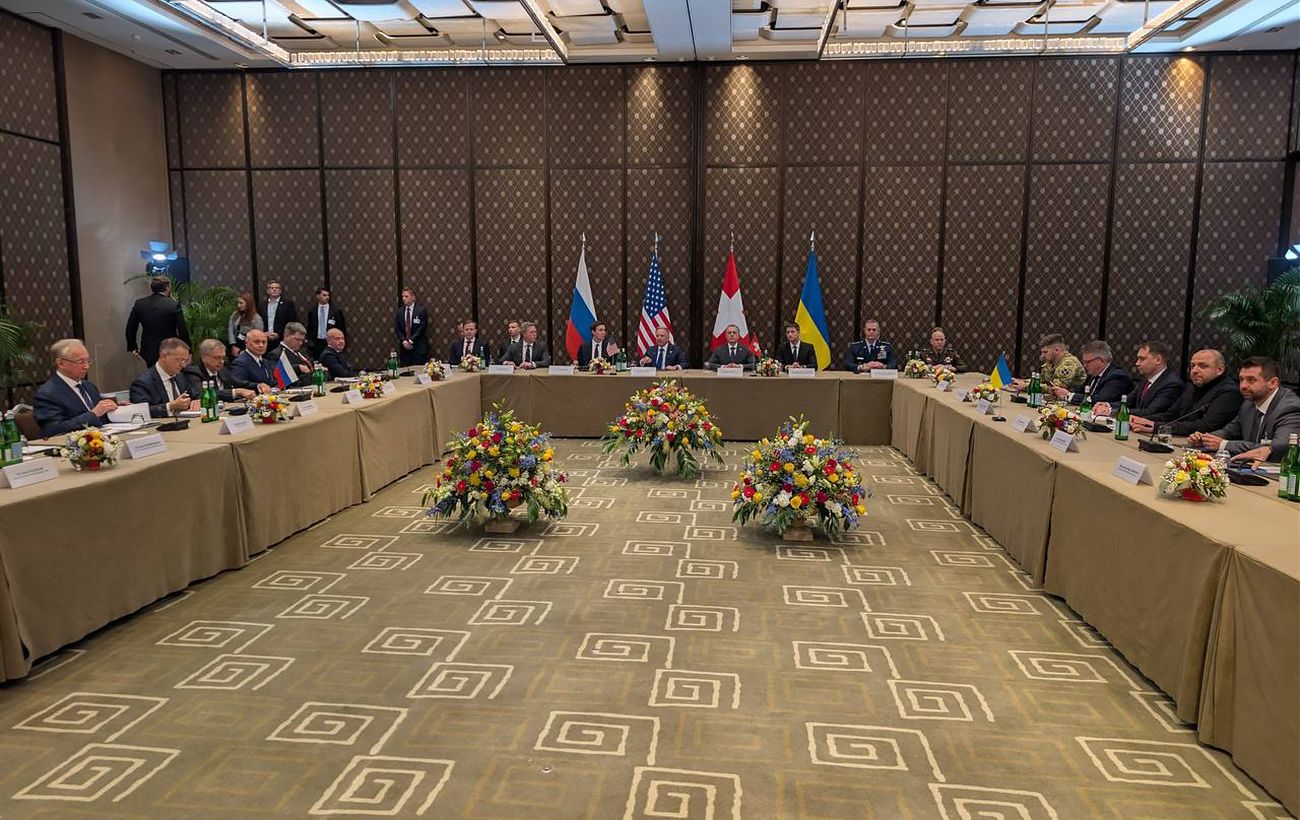
On February 18, negotiations involving Ukraine, the United States, and Russia continue in Geneva, marking the second day of discussions aimed at resolving ongoing tensions. The talks are taking place within a framework focused on both political and military issues.
Diana Davityan, spokesperson for Ukraine’s National Security and Defense Council, confirmed that meetings are scheduled for the morning. Pro-Kremlin media have reported that discussions will commence at 10:00 AM local time.
The primary objective for today is to translate the discussions from the previous day into tangible agreements. However, the atmosphere remains tense, as Russia has recently launched another wave of missile and drone attacks targeting Ukraine’s energy infrastructure, coinciding with a change in its delegation leadership.
Despite the diplomatic efforts, Russia’s ongoing military actions have raised concerns. President Volodymyr Zelensky has instructed the Ukrainian delegation to address the United States regarding Russia’s adherence to agreements aimed at halting attacks during negotiations.
Additionally, Ukraine is pressing for a direct meeting between Zelensky and Russian President Vladimir Putin, viewing this as a crucial step toward achieving a significant breakthrough.
The first day of talks, held on February 17, lasted approximately four hours and yielded mixed impressions. According to Rustem Umerov, discussions were centered on practical matters, with separate sessions focusing on military and political aspects.
Steve Witkoff, the U.S. special envoy, noted that there had been “significant progress,” suggesting that previous efforts had helped bridge gaps between the parties. However, Axios reported that the political group was effectively at an impasse, attributed to the composition of the Russian delegation and their rhetoric. The change in leadership from Igor Kostyukov, head of the GRU, to Vladimir Medinsky, an aide to Putin known for lengthy historical lectures, has frustrated Ukrainian negotiators.
“We do not have time for this nonsense. We need to end the war,” Zelensky remarked, expressing his dissatisfaction with the current pace of discussions.
The issue of territorial disputes remains the most contentious aspect of the negotiations. U.S. Ambassador to NATO Matthew Vitaker identified this as a key sticking point. Zelensky has firmly stated that Ukraine will not agree to a peace settlement that involves ceding control over the Donbas region, highlighting the unfairness of calls for concessions directed at Ukraine rather than the aggressor.
In parallel to the trilateral talks, the Ukrainian delegation has held separate discussions with European partners, including representatives from France, the United Kingdom, Germany, Italy, and Switzerland, in an effort to synchronize their positions.
Previous rounds of negotiations involving Ukraine, the U.S., and Russia took place in Abu Dhabi on January 23-24 and February 4-5, with limited progress made towards ending the conflict. However, an agreement on a prisoner exchange was reached during these discussions, marking the first such arrangement in five months.
This round of talks in Geneva represents the first time since the onset of the full-scale war that Europe has been chosen as a venue for negotiations. The Russian delegation is led by Medinsky and includes Kostyukov, with reports indicating that the team comprises over 15 members. Ukraine’s representatives include Umerov, Kirill Budanov, and other delegation members, while the U.S. side features Jared Kushner, Witkoff, and U.S. Army Secretary Daniel Driscoll.
The Kremlin has indicated that the agenda for the Geneva talks will be broader, encompassing territorial issues, while Ukraine aims to achieve progress on energy ceasefire and humanitarian agreements.
The ongoing negotiations in Geneva between Ukraine, the U.S., and Russia are focused on resolving critical issues, including territorial disputes and military actions. While some progress has been reported, significant challenges remain, particularly regarding Russia's adherence to agreements and the composition of its delegation.