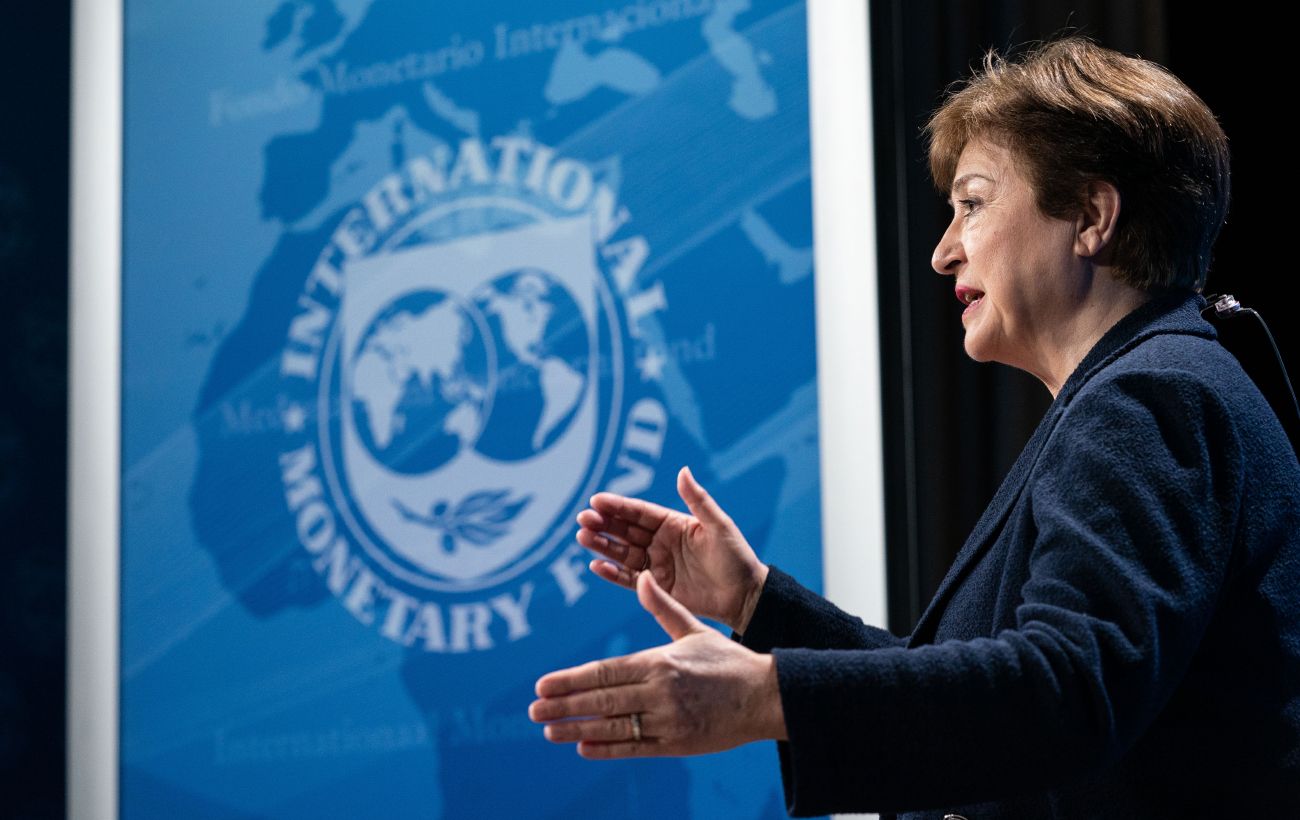
The International Monetary Fund (IMF) has made a significant decision to waive prior conditions for a new loan program for Ukraine, amounting to $8.1 billion. This unprecedented move involves the removal of requirements related to value-added tax (VAT) for individual entrepreneurs, customs duties on packages, taxes for digital platforms, and military contributions.
Currently, there are no prior actions necessary for Ukraine to receive this program. The IMF’s board of directors is expected to discuss Ukraine’s situation at its upcoming meeting at the end of February, according to officials.
This marks the first instance in the history of Ukraine’s collaboration with the IMF where the necessity for prior actions has been eliminated, with these conditions instead being classified as structural benchmarks. Typically, benchmarks that are not met are elevated to prior actions.
According to the Prime Minister, the adjustment of terms was achieved through negotiations with the IMF following the visit of IMF Managing Director Kristalina Georgieva to Kyiv. It was agreed that all four prerequisites must be fulfilled after the board approves the new program.
The removal of prior actions facilitates the board’s ability to make a decision regarding Ukraine’s funding at one of its forthcoming meetings. Consequently, a first tranche of approximately $1.5 billion could be allocated to Ukraine shortly after such a decision.
The new program also opens the door for the European Union to provide a credit line of €90 billion for 2026-2027. Ukraine anticipates receiving €60 billion from this amount in 2026, with an initial €15 billion for the budget and €45 billion earmarked for military needs. In 2027, an additional €30 billion is expected, split evenly between budgetary and military allocations.
Discussions are ongoing regarding the timing and structure of these funds, as emphasized by the Prime Minister.
She also highlighted that the development of a financial strategy is currently a priority. The Ministries of Finance and Defense are working to refine defense and budgetary requirements. Once finalized, these calculations will be presented to partners, allowing for funding to commence as early as April, which is critical for meeting defense and essential budgetary expenditures.
All tax and customs modifications that have been removed from the category of prior actions will now be classified as structural benchmarks, requiring compliance for the next program review. Legislation concerning digital platforms, customs duties on packages, the continuation of a 5% military tax, and the introduction of VAT for individual entrepreneurs will be consolidated into one comprehensive bill, referred to as the Beautiful Tax Bill.
Regarding VAT for individual entrepreneurs, an agreement has been reached to increase the threshold from UAH 1 million to UAH 4 million. This change will affect approximately 257,000 small business representatives, rather than the previously estimated 660,000.
The introduction date for VAT for individual entrepreneurs is still under discussion with the IMF, with possibilities ranging from 2028 or coinciding with Ukraine’s accession to the EU.
The Beautiful Tax Bill is expected to be passed by March; however, the Prime Minister noted that securing sufficient votes in Parliament remains challenging.
Our partners expect that we will approve these changes in the first reading and in full by March. However, we candidly acknowledge that the situation regarding parliamentary votes is complex. We have conducted numerous meetings with factions and are working in coordinated formats, she stated.
She remarked that, given the security challenges and societal pressures, any tax changes are received with sensitivity, emphasizing that tax reforms are a collective responsibility of the government, parliament, and all branches of power.
The IMF’s decision to ease conditions was influenced by significant changes in Ukraine’s situation due to energy infrastructure attacks. The Prime Minister noted that the current circumstances differ markedly from those in November when negotiations with the IMF were underway.
Sources familiar with the negotiation process indicated that a pivotal moment for the IMF’s position shift was Georgieva’s visit to Kyiv in mid-January. She observed the resilience of Kyiv, which, despite being dark and cold, remained unyielding.
During her visit, the IMF Managing Director was able to assess the damage to the energy infrastructure caused by Russian strikes.
The IMF has waived prior conditions for Ukraine’s $8.1 billion loan program, allowing for expedited funding. This decision reflects significant changes in Ukraine’s situation following recent energy infrastructure attacks.