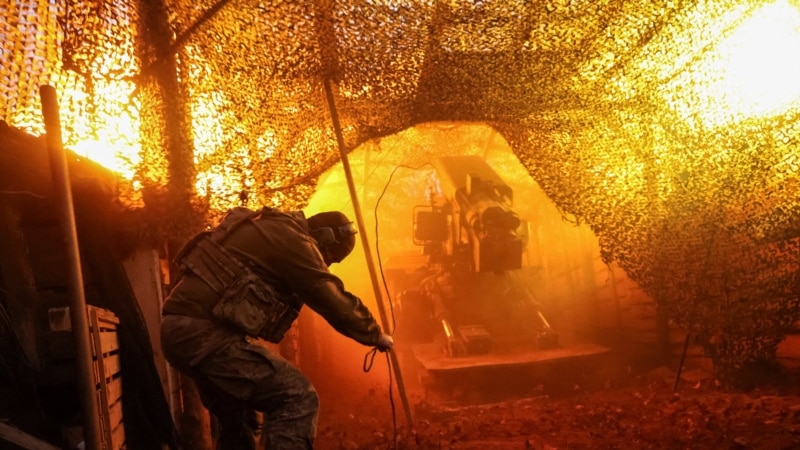
“According to the headquarters, the largest number of Russian attacks were in the Pokrovsky direction – here Ukrainian defenders stopped 45 assault actions of the aggressor”, — write: www.radiosvoboda.org
“Yesterday, the enemy launched two missile and 60 air strikes, used 57 missiles and dropped 143 guided air bombs. In addition, it carried out 4,291 attacks, including 117 from rocket salvo systems, and involved 6,360 kamikaze drones to destroy them,” the message reads.
In the direction of Kostyantynivka, Russian troops carried out 23 attacks in the areas of the settlements of Kostyantynivka, Ivanopillia, Oleksandro-Shultine, Shcherbynivka, Pleshchiivka, and towards the settlements of Stepanivka, Sofiivka, and Brestok.
There were 16 Russian attacks in the Oleksandrovsky direction.
The enemy continues its attacks in the South-Slobozhansk, Kupyansk, Lymansk and Slavyansk directions (13 attacks each), Kramatorsk, Gulyaipilsk (14 attacks) and Orihiv directions.
There were no offensive actions of the Russian troops in the Dnieper direction.
At the end of November, the American Institute for the Study of War (ISW) noted in its report that Russian propaganda is spreading the statements of Russian President Vladimir Putin, trying to create the impression that the Ukrainian front line will allegedly “collapse soon.” But, according to analysts, these statements have no basis and are aimed at forcing Ukraine and its Western allies to agree to the Kremlin’s terms, which Russia is unable to achieve militarily.
On December 1, the Ministry of Defense of the Russian Federation announced on its resources the alleged capture of Pokrovsk. Donbas Realiy (a Radio Liberty project) has collected statements and data refuting the occupation of the city.
Pokrovsk – a city with a population of about 1,250 people (estimated by the local authorities at the end of October, before the start of the full-scale invasion of the Russian Federation – more than 60,000) – is an important road and railway junction and was under threat of encirclement by Russian troops for most of the year.