
“At least 114 people, including 46 children, have been killed in a series of attacks on civilian infrastructure by the Rapid Response Force (RSF) paramilitary group in South Kordofan state, Sudan.”, — write: www.pravda.com.ua
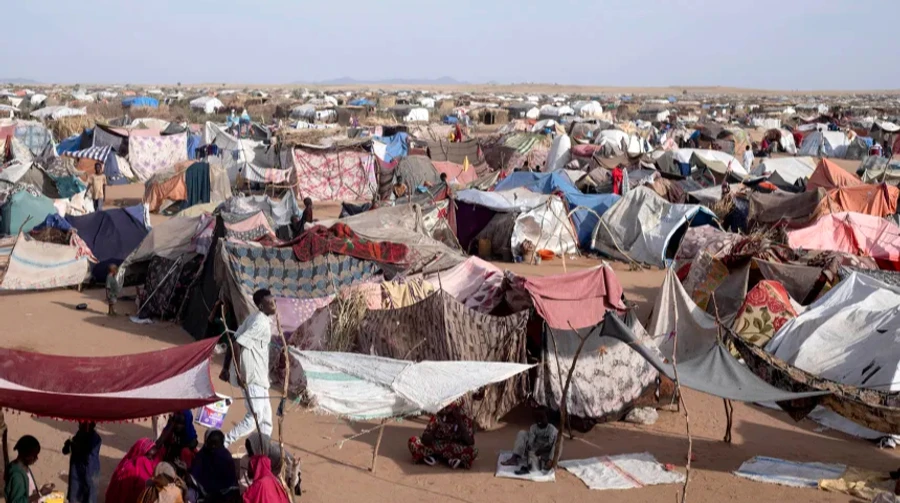 Temporary shelters for refugees from El Fasher in the Umm Yankur camp on the southwestern outskirts of Tawila in Darfur. Photo: Getty Images
 Source: BBC, Al Jazeera with reference to local authorities and humanitarian organizations
Details: According to a local official, the first attack took place on Thursday in the town of Kaloghi. RSF fighters, together with allies from the Sudan People’s Liberation Movement (Northern Wing), carried out drone and artillery strikes on a kindergarten, a city hospital and a government building. 71 people died in this attack alone.
Advertising:
Representatives of the Sudan Doctors Network reported that when paramedics arrived at the scene to treat the victims, they were targeted by a “second surprise attack.”
Due to severe communication disruptions in the region, it is extremely difficult to obtain accurate data on the scale of destruction and the number of victims. There is a possibility that the real death toll is much higher.
The United Nations Children’s Fund (UNICEF) sharply condemned the actions of RSF militants. The organization’s representative in Sudan, Sheldon Yett, called the killing of children in an educational institution “a terrible violation of children’s rights.”
“Children should never suffer in conflict,” Yett added, calling on the parties to “immediately end these attacks and ensure safe, unhindered access for humanitarian aid to those most in need.”
For reference: The war in Sudan is a power struggle between the country’s two main military forces: the official army, known as the Sudan Armed Forces (SAF), and the paramilitary group, the Rapid Response Force (RSF). Before full-scale hostilities broke out in April 2023, the leaders of these two factions, two generals, were allies who staged a military coup together. However, their alliance fell apart due to deep disagreements over who would have ultimate control of the country, which escalated into an open war for power.
The war has sparked what humanitarian organizations call the world’s biggest humanitarian crisis. Tens of thousands of people were killed and millions were forced to flee their homes. The country’s infrastructure, in particular the health care system, has collapsed: most hospitals in the war zones are destroyed or not functioning, and the delivery of humanitarian aid is extremely difficult due to constant fighting and blockades.
Prehistory:
- After the fall of El Fasher last month, the last major city under the control of government forces in the Darfur region, the epicenter of the conflict has shifted to Kordofan. The region is of strategic importance as it serves as a corridor between the west of the country and the capital, Khartoum, which was recaptured by government forces in early 2025.
- The UN High Commissioner for Human Rights, Volker Turk, said that the history of mass killings of civilians is “repeating itself”. Since late October, when the RSF captured the town of Bara, the UN has recorded at least 269 civilian killings in the region as a result of bombings and extrajudicial executions, whose corpses could be seen on satellite images.
- United Nations Secretary General Antonio Guterres said that the war in Sudan is “getting out of control” and turns into one of the most terrible humanitarian disasters in the world.
- Ukraine called on the parties of the armed conflict in Sudan and the international community to take all possible measures to stop the bloodshed in the country against the background of reports of “horrific acts of violence against civilians” in the city of El Fasher, after its capture by the RSF.