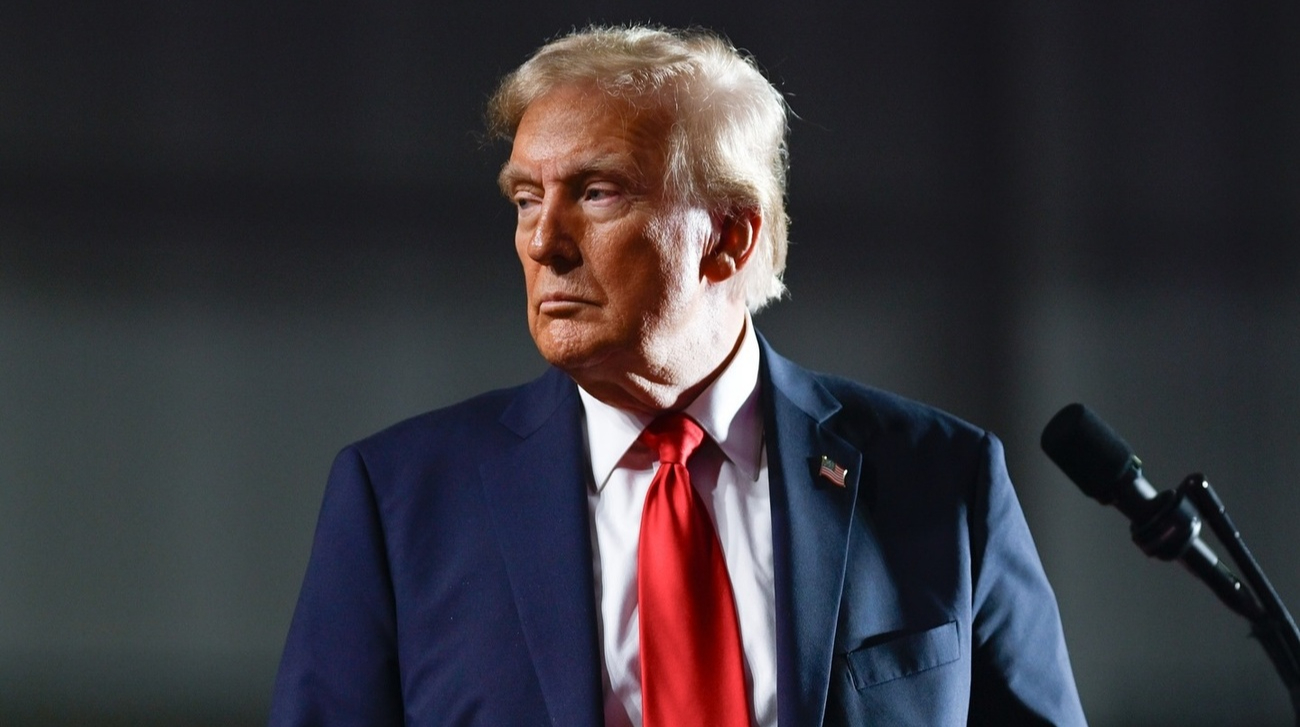
“CNN notes that in an effort to conclude a “peace agreement” to end Russia’s war in Ukraine, US President Donald Trump is choosing an “unconventional – and sometimes controversial – approach to diplomacy.””, — write: www.pravda.com.ua
Source: CNN
Details: The publication reminds that Trump sent special envoy Steve Witkoff and his son-in-law Jared Kushner for talks with the Russian ruler Vladimir Putin. The publication adds that none of them were approved by the Senate for diplomatic posts.
Advertising:
Literally from the publication: “Trump’s latest efforts on Ukraine, which include in-person meetings led by Witkoff, Kushner, Army Secretary Dan Driscoll and Secretary of State Marco Rubio, highlight his unconventional – and at times controversial – approach to diplomacy.”
Details: CNN notes that during his second term, Trump has turned to a narrow circle of business partners and trusted allies to try to resolve some of the world’s most difficult conflicts.
In the end, the publication adds, they succeeded. Witkoff and Kushner were key brokers in brokering a cease-fire agreement between Israel and Hamas, which administration officials say is why they were put at the center of negotiations to end Russia’s war against Ukraine.
Trump described Witkoff as a “great negotiator” after the Gaza ceasefire agreement was reached.
Witkoff was originally appointed as a special envoy to the Middle East with the task of trying to end the war in Gaza. But his mandate quickly expanded to include efforts to end Russia’s war in Ukraine.
Literally CNN: “His appointment to handle two of the world’s most difficult crises has drawn consternation in Washington and abroad.”
Details: However, a former senior State Department official noted that Trump “has always been reluctant to submit to bureaucratic structures” and instead relied on “personal diplomacy.”
CNN notes that Witkoff’s warm relationship with Moscow has raised concerns among some U.S. allies, especially given that he has previously spoken to senior Russian officials without experienced diplomats present, and sometimes even without U.S. officials to take the minutes.
Trump himself said that the meeting between Putin and his special envoy, which was originally supposed to last 15-20 minutes, ended up lasting five hours.
During the phone call, the transcript of which was made public by Bloomberg, Witkoff advised Russia’s top foreign policy adviser Yury Ushakov on how Putin should approach the conversation with Trump, which took place a day before the US leader met with Ukrainian President Volodymyr Zelensky.
Some European officials said they found the revelation unfortunate but not surprising. Trump, meanwhile, dismissed those concerns.
“He’s got to sell it to Ukraine, he’s got to sell Ukraine to Russia. That’s what a deal does,” Trump told reporters last week.
Asked Monday what Trump expected from the upcoming meeting in Moscow, White House spokeswoman Caroline Levitt said “the administration is very optimistic.”
Kushner, who participated in two high-level meetings with Ukrainian officials as part of the American delegation over the course of two weeks, has once again become a key figure in the administration’s diplomatic efforts.
The publication reminds that Kushner does not have an official position in the Trump administration. He once again found himself in the public eye when he and Witkoff negotiated a cease-fire plan in Gaza.
Literally from the publication: “After that shaky truce, he quietly worked with the businessman-turned-envoy on efforts to end the war in Ukraine, multiple sources familiar with his role told CNN.”
Details: White House officials and people close to Kushner say there was no specific moment when it was decided that the president’s son-in-law would begin working on Russia and Ukraine issues. Instead, they say it was a natural extension of work he did before Trump took office, helping to advise some administration officials during the presidential transition on Middle East issues.
According to CNN sources, Trump considers Kushner his “right-hand man” in matters of foreign policy. One source close to him described him as someone who has good ideas about how to tackle difficult issues.
Sources close to him also say he has a rare quality that even the highest ranks of the president’s entourage lack: Trump’s complete trust.
That trust, the sources said, was crucial to letting foreign leaders know that when he participated, they were essentially dealing directly with Trump.
But relying on such a narrow circle, as Trump does, is dangerous, according to a former high-ranking State Department official.
Trump “believes that his emissaries, whoever they are, if they’re seen as directly connected to him and as expressing his point of view, then that’s important,” the official told CNN.
As for the negotiations between Russia and Ukraine, “the president is turning to people he knows well, whom he trusts, and who, in his opinion, have been successful in other areas and business and, undoubtedly, can be successful in this as well.”
The Secretary of the US Army, Dan Driscoll, has also become a key figure in the renewed negotiations on ending the war, although he is not going to go to Moscow, writes CNN.
Driscoll, a friend of Vice President J.D. Vance, held a series of meetings with senior Ukrainian officials in Kyiv and Geneva as the administration pressed them to accept an agreement to end the war. He also met with Russian officials in Abu Dhabi.
Leslie Shedd, a former senior adviser to the House Foreign Affairs Committee who now serves as a non-resident fellow at the Atlantic Council, said he has “really become a rising star in the administration.”
Former diplomat Daniel Fried said Driscoll’s “presence” as “a trusted person in Trump’s world is important.”
However, “you need someone who, like Driscoll, understands the details,” said Fried, who was the U.S. ambassador to Poland. “You can expect the Russians to make all kinds of unexpected challenges disguised as sweet promises. You need someone who can detect stink bombs in a nice wrapper.”
Kushner’s presence on the team working on Ukraine appeared to reflect Trump’s growing frustration with his inability to quickly end the years-long conflict and his desire to implement his approach, which he used during the agreement regarding Gaza, to Russia and Ukraine.
For Ukrainians, it was also a signal that Trump believes that the deal is quite real.
“The Ukrainians believe that Trump sees Kushner as a mediator. They hope that Jared will be able to overcome the differences, they are working on it together with the administration, but they do not believe that it is already at the finish line,” a source close to the Ukrainians told CNN.
However, some have questioned Kushner’s role in the negotiation process as the administration works to strike a deal with Russian authorities, who Trump himself has said do not seem interested in peace.
In late October, Witkoff and Kushner met in Miami with the representative of Russia, Kirill Dmitriev, who is under sanctions, a source familiar with the meeting told CNN. Dmitriev, like Kushner and Witkoff, is not an official diplomat, but has close ties to Putin and is therefore considered a reliable mediator.
According to the publication, Kushner and Dmitriev, a graduate of Harvard Business School, have known each other for many years. According to a CNN source close to the White House, the two worked together during Trump’s first term.
A few weeks after this meeting, a draft “peace plan” with 28 points appeared, which European officials and members of Congress called “Ukraine’s capitulation.”
The White House said both Witkoff and Rubio worked on the project. According to Rubio, changes were made to the project during a meeting in Geneva between high-ranking officials of the United States and Ukraine at the end of November. On Sunday, a senior US diplomat said talks in Florida were continuing to progress. Rubio led the delegation to both of those meetings.